

 All news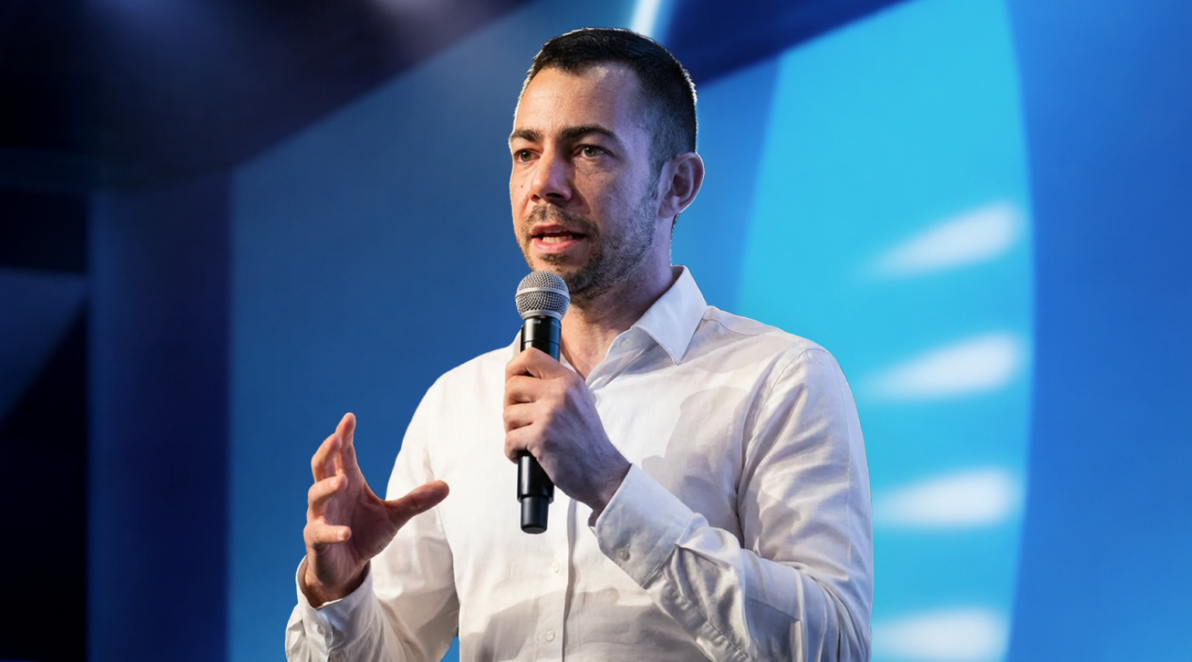
Recently, Bozhidar Bozhkov represented Devexperts at an iFX Expo Asia panel titled: “Reinventing Risk Management: What Brokerages Must Do Next”. The discussion centered around the current state of play in risk management and possible future trajectories as AI comes to exert more influence in finance.
The panel comprised experts from both brokerage and technology provision, and explored how brokers can strengthen risk management practices, choose the right partners, and remain competitive while keeping clients protected.
To kick off, the group highlighted how mass retail participation has changed the nature of market volatility. Today’s retail investors are experienced market operators in close communication with each other via social media. Unlike the retail traders of old, they’re able to detect and take advantage of execution delays and general system latency with alarming speed.
In other words, managing risk has shifted from a focus on purely market-related exposure, news, or known strategies such as scalping. Today’s risk managers must contend with all the above risks, but are also required to monitor their entire trading infrastructures in real time to be able to detect and correct vulnerabilities before traders can take advantage of them and spread the word.
As an example of what technology providers are doing to aid brokers, Bozhkov highlighted how DXtrade is able to provide a constant view of business, client, and liquidity provider exposure, making it easy to spot and realign exposures as market conditions change.
He noted the importance of systems that enable brokers to react quickly, but also the necessity of proactive risk management to ensure the ongoing resilience of brokerage systems.
The panel also turned to the perennial question of in-house development versus outsourcing to competent third parties. Viewed through a risk management lens, the majority of the panel agreed that in today’s market, it makes sense to outsource key technologies to expert providers. This allows each party to invest in tackling the risks specific to their business. For example, client/market exposure for brokers and technology risks for third-party providers.
Bozhkov explained the importance of shared data within an organization as crucial to effective crisis management as it allows many sets of eyes from different departments to have a view of that same data. This can be critical to reducing a business’s response time to unforeseen events.
He also shared Devexperts’ approach to this, with DXtrade’s backend reporting capabilities enabling all relevant team members to generate reports based on the same underlying data, tailored to their departmental needs. Devexperts API enables complete report customization, allowing the same data to be sliced in multiple ways.
During the conversation, it didn’t take long for the topic of AI to arise, as was perhaps to be expected. Here, there appeared to be some disagreement between the speakers, with some suggesting that complete AI automation to completely replace human dealing teams is impractical and may actually amplify potential risks, while also acknowledging that, despite this, the market demand is growing for such solutions.
Other panel members agreed with this in principle; however, they didn’t go as far as claiming that what experienced dealers do will never be formalized into a set of algorithmic instructions. The general view was that this area, too, would also eventually see AI taking on more of the heavy lifting.
Bozhkov commented on the revolutionary nature of AI and shared the approach that Devexperts has been pursuing. The company’s focus has been on client-facing AI products, but also on the analysis of trader behavior for brokers.
Devexa is Devexperts’ AI communication agent, which can perform technical analysis on any given trading instrument, as well as automate trading and risk management based on user-defined rules.
Acomotrade is Devexperts’ AI personalization tool for brokers; it analyzes the behavior of traders to provide brokerage teams with actionable client segmentation insights and communication options that are tailored to different groups.
He also speculated that the biggest impact of AI in the trading industry, at present, is in helping to write and audit code, assisting human engineers in ensuring that human error is minimized, leading to more reliable products.
The group concluded that AI will continue to play a bigger role in decision-making across a number of domains, assisting decision-makers but ultimately having the buck stop with human executives. The idea here is to furnish human teams with useful analyses that can help organizations reduce decision lag and improve their responses to crises.
In this regard, training data could end up being an extremely valuable commodity for financial services firms that take AI seriously as a crisis mitigation and response tool, both for brokers and technology providers.
